Monday, April 30, 2012

Review: Pirate Hunting by Benerson Little

Pirate Hunting: The Fight Against Pirates, Privateers, and Sea Raiders from Antiquity to the PresentPirate Hunting: The Fight Against Pirates, Privateers, and Sea Raiders from Antiquity to the Present by Benerson Little

My rating: 4 of 5 stars


  Pirate Hunting: The Fight Against Pirates, Privateers, and Sea Raiders from Antiquity to the Present
 
by Benerson Little is an excellent historical survey from present day.  LIttle presents a scholarly yet readable history of piracy from the earliest records to the action off Somalia. His footnotes at the end of the book attest to a great attention to detail. LIttle does not quote the same commonly cited sources such as Johnson and Exquemelin, so the fresh sources help build a better picture of piracy's character throughout the ages.


Little brings a wealth of practical experience to the table. First as a former Navy SEAL, he is well acquainted with small boat actions, which have for centuries been the preferred way to board and take a vessel.  He is also a fencing instructor, who has great experience with close quarters combat. Benerson Little is to pirate history what Sam Willis is to the Age of Sail naval history.


I would recommend Little's books to anyone who has more than a passing interest in the problem of piracy.  He does not have a political agenda coloring his work, but presents an intelligent, yet gritty view of pirates as they actually were and still are.


View all my reviews

Friday, March 9, 2012

Review: The Illustrated Pirate Diaries

The Illustrated Pirate Diaries: A Remarkable Eyewitness Account of Captain Morgan and the BuccaneersThe Illustrated Pirate Diaries: A Remarkable Eyewitness Account of Captain Morgan and the Buccaneers by Alexander O. Exquemelin

My rating: 4 of 5 stars


This profusely illustrated coffee-table style book does attempt to reproduce Alexander O. Exquemelin's experiences among 17th Century Caribbean pirates as a ship's surgeon. For those who do not know, Exquemelin's original book was written in Dutch, but was subsequently translated into French, Spanish and English. Each edition featured new material, usually slanted according to national politics of the day.

This edition attempts to present what Exquemelin actually experienced. As an eyewitness to Henry Morgan's audacious raid on the city of Panama,  Exquemelin's account has an authentic ring with a good many details that a ship surgeon would know about the pirates he tended.

I do wish the type size was much bigger.  I find it difficult to read the text when surrounded by the large colorful illustrations. Though not an annotated text as such, the illustrations, cut lines and sidebars provide readers with a good deal of useful background information.


View all my reviews

Sunday, February 26, 2012

Review: Pirate Hunter

Pirate HunterPirate Hunter by Tom Morrisey

My rating: 5 of 5 stars


Pirate Hunter by Tom Morrisey is a parallel tale of two young men and the love/hate relationship they have with their fathers.  This is a common theme found in Morrisey's work, one which I think he handles well in his stories. The tales do intersect in an interesting way which I am not going to reveal our of respect for the story teller.


Both tales are set in the Caribbean with the stories separated by about 400 years, give or take. The parallel tales are told in alternating sections. The first story involving a young African man sold into slavery in Africa.  Surviving the harrowing passage, he is taken by pirates and given the chance to join the crew.  The second story involves a young marine archaeologist given the dream job of working active wreck sites with a firm based out of Key West, but seems bent on self-destruction.


Morrisey's technical background as a diver and diving magazine editor serves him well for the modern story. He manages to present the pirates in a slightly different light than modern readers might expect.  Good story-telling tension is maintained throughout the parallel tales and you can easily find yourself rooting for both sets of heroes.  There is plenty of derring-do to go around.


I would recommend this story to anyone who has a love of the sea and an interest in things "piratey."  It's a good read with a good message.


Morrisey's work does not get the attention is deserves, given that the Christian market is heavily slanted to romance readers. This I find to be something of a mystery as many women are fans of a certain Captain Jack. I would rate him as every bit an equal to ABA writer Clive Cussler, who by the way is a personal favorite of mine. Do take the time to seek out Pirate Hunter.


View all my reviews

Saturday, November 12, 2011

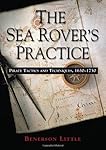
REVIEW: The Sea Rover's Practice

The Sea Rover's Practice: Pirate Tactics and Techniques, 16301730The Sea Rover's Practice: Pirate Tactics and Techniques, 16301730 by Benerson Little

My rating: 5 of 5 stars


The Sea Rover's Practice by Benerson Little, is a great read for those who want to delve into the tactics and techniques used from 1630 to 1730 by pirates and privateers in the Caribbean.  Author Little is a former Navy SEAL who also teaches fencing.  His love of history, military experience, and his skill with swordplay is very apparent in this highly readable book. 

For those of use who want to delve deeper into the subject of piracy, his appendices are invaluable. I also very much appreciate that Little has taken the trouble to keep an updated PDF file of errata and commentary for this book on his author's web site, www.benersonlittle.com.

I very much enjoyed the way Little draws numerous parallels between the 17th and 18th century sea raiders and modern special operations units like the U.S. Navy SEALs.  Little calls attention to the intelligence gathering activities used by sea rovers to select their targets and corroborate information. Little reveals the sea rovers as sophisticated operatives who used their knowledge of the sea to carry out successful shore raids and take valuable cargo at sea.

Little has written a number of books on pirates.  I also have How History's Greatest Pirates Pillaged, Plundered, and Got Away With It:  The Stories, Techniques, and Tactics of the Most Feared Sea Rovers from 1500-1800 and I will review this book shortly.  Little's book, Pirate Hunting:
The Fight Against Pirates, Privateers, and Sea Raiders From Antiquity to the Present
is high on my to-read list.


View all my reviews

Monday, December 6, 2010

Review: The Republic of Pirates: Being the True and Surprising Story of the Caribbean Pirates and the Man Who Brought Them DownThe Republic of Pirates: Being the True and Surprising Story of the Caribbean Pirates and the Man Who Brought Them Down

The Republic of Pirates: Being the True and Surprising Story of the Caribbean Pirates and the Man Who Brought Them DownThe Republic of Pirates: Being the True and Surprising Story of the Caribbean Pirates and the Man Who Brought Them Down by Colin Woodard

My rating: 5 of 5 stars


I love a book title that accurately describes itself. In this case, The Republic of Pirates: Being the True Story of the Caribbean Pirates and The Man Who Brought Them Down by Colin Woodard while being a bit long-winded accurately summarizes the tale. 

Woodard's journalistic background and natural story-telling style lends well to understanding how a group of seagoing cutthroats got started in the pirate trade and how eventually they wound up founding and losing a pirate republic.

Woodard reintroduces us to many of the pirates we know from sources like Captain Charles Johnson's 1724 book, A General History of the Robberies and Murders of the most notorious Pyrates. This rogues gallery includes names like Edward Thatch aka Edward Teach aka Blackbeard, Sam Bellamy, Charles Vane, Henry Jennings, Benjamin Hornigold, and Paulsgrave Williams.

He places their deeds in the context of Jacobite sentiment and the events leading up the the Rising of 1715, which was a major rebellion against King George I of Britain and his German house of Hanover in favor of reestablishing the reign of James II of the Scottish house of Stuart.

Along the way, Woodward introduces us to Jamaican governor Lord Archibald Hamilton, the career Royal Navy man and Jacobite conspirator  who selected and equipped many of the Golden Age of Piracy's most notorious pirates. 

Woodard plots a detailed chronological course for the major pirates, showing how they wound up taking over the weakly-governed islands of the Bahamas. He also introduces us to the flawed but heroic Woodes Rogers, who would eventually drive the pirates out of the Bahamas. 

A Bristol merchant, Rogers was one of the few men to have circumnavigated the world in his day, returning with his original ships and most of his crew. On his world-girdling voyage, Rogers rescued the marooned Alexander Selkirk, who would become the inspiration for Daniel Defoe's Robinson Crusoe.

Involved both as a privateer and a slave-trader, Rogers seems at first blush one who would be voted most likely to be a pirate. Woodard establishes Rogers' motives and tells both the good and the bad about the man who eventually would twice be appointed as royal governor of the Bahamas.

I recommend this book to anyone who would like to get a larger vision for the problem of 18th century piracy in the Caribbean or who simply loves history told well. It is also an excellent source for fiction writers, especially the extensive endnotes.


View all my reviews

Saturday, December 4, 2010

Guest Interview: C.L. Dyck with Marc Schooley on König's Fire


It is my very great pleasure to introduce writer-editor C.L. Dyck's interview of Christian speculative fiction writer Marc Schooley as they discuss Schooley's latest book König's Fire.

Schooley's König's Fire has gained notice for Christian speculative fiction with a favorable mention in Publisher's Weekly. You can learn more about Marc Schooley at www.marcschooley.com

Writer-editor C.L. Dyck is friend to many Christian speculative fiction writers. A gifted writer in her own right, Dyck's thought-provoking essays can be found at her web site scitascienda.com.

Now before you eyes wander any farther, please click on the interview and enjoy.

Sunday, November 21, 2010

On writing - Guard your heart

One of the toughest things I've ever learned, and am still learning, is how to guard my heart against the comments of others. Rejection in its many forms can wound deeply, especially if what you are expressing comes from deep within you.  If you find yourself crying as you write, you've tapped into something that you deeply feel and intensely want to share with others.  Rest assured that there will be people who read your work who just won't get it. They can wound you deeply if you let them.

Thanks to the wonders of the Information Age, reviewers are no longer limited to the local newspaper's Sunday book column. Instead, average people using their home computers  can now determine the sales of your work and your future as a writer by posting their opinions at blogs and online booksellers.

If you have a thin skin, that is if you are easily offended, then you might not find this form of feedback to be the acclaim you've desired. My major mental defense against written criticism has been a line about life in the big city  from that profoundly deep movie, "Muppets take Manhattan," to wit: "Peoples is peoples."  I use that phrase to remind myself that you are going to experience both good and ill from critics because "Peoples is peoples."  Count on it. It's a fun maxim that stirs a chuckle instead of a sigh.

Criticism, even ill-meant criticism, can contain nuggets of truth that will strengthen you and improve your work, if you are prepared to receive them. Proverbs 17:10 says, "A single rebuke does more for a person of understanding than a hundred lashes on the back of a fool."  Therefore, stay humble and teachable without becoming a doormat for everyone who has an opinion.

As for an emotional defense against rejection, I've learned to guard my heart, first by choosing with whom I will share certain things, and secondly by first examining my motivations for sharing deeply felt observations with anyone.  Those closest to you may be unprepared to appreciate your work. Even Jesus experienced this in Mark3:21, "When his family heard what was happening, they tried to take him away. "He's out of his mind," they said."

Jesus warns us in Matthew 7:6, "Do not give dogs what is sacred; do not throw your pearls to pigs. If you do, they may trample them under their feet, and then turn and tear you to pieces."  There will be people who won't value what you have to offer them.  Simply put, they may not be ready to see the value in your words and may even violently oppose you. Those closest to us though their rejection can hurt us the most.  You cannot prove anything to someone who is unprepared to receive it. Give them grace, forgive them, and move on.

Take a deep look at your motivations for wanting to share your work with others.  If writing "burns in your bones," then you don't have much of a choice.  It can be a bittersweet calling with moments of great loneliness and moments of great joy, especially if your writing reveals the Lord's beauty.  However, if you are writing to win the acclaim of others, you can be deeply hurt through the sting of rejection and indifference.

Jeff Gerke in his book, The Art & Craft of Writing Christian Fiction, takes this issue head on in his first section, "The Spiritual Heart of Writing Christian Fiction,"  Jeff talks about entering a place of fullness in your relationship with God so that you no longer desire the acclaim of others and you are not greedy for success.   If you really want to write Christian speculative fiction, it's a necessary place to be.

Should you find the codependent need to earn the love of others, seek counseling to help you find emotional healing. You will be able to help others better and better weather the buffets of a hostile planet.  I learned this the hard way and lost years of writing time in the face of even the most feeble criticism. I found I could not articulate my deepest feelings in writing  because I was afraid of rejection and hog-tied by it. I found my identity not framed by the opinions of others, but established in my personal relationship with God.

Finally, in experiencing spiritual rejection, take comfort that you will experience rejection because our loving Lord Jesus is daily rejected on many levels.  Like Him, we will experience rejection from those opposed to his message of God's love and healing.  Like Him, we must also realize that we will be attacked by those under the sway of evil, because as Ephesians 6:12 says, "For we are not fighting against flesh-and-blood enemies, but against evil rulers and authorities of the unseen world, against mighty powers in this dark world, and against evil spirits in the heavenly places."

Our work is not only read by humans, but by those beings who have spiritual connections to their unsuspecting mortal hosts.  Therefore what we write is transmitted to infernal places where the truth of the Gospel is deeply feared.  As James 2:19 says, "You say you have faith, for you believe that there is one God. Good for you! Even the demons believe this, and they tremble in terror."

Our writing as a testimony of our faith will earn on-going spiritual attacks.  Revelation 12:11 says, "And they have defeated him by the blood of the Lamb and by their testimony. And they did not love their lives so much that they were afraid to die."

Count on big-time opposition, stand firm, and spend time before God daily in prayer, in His word, in meditation, and in worship. In doing so, you don the whole armor of God found in Ephesians 6:10-20 and like Paul serve as an ambassador of life to a dying planet.